

Last week, I stood in front of a room of accomplished CEOs in New York City and challenged them to consider something most successful leaders would rather not hear:
You may be the greatest constraint on your organization's continued success.
The occasion was CEOcircle, an executive leadership initiative of Syracuse University's D'Aniello Institute for Veterans and Military Families - IVMF and J.P. Morgan. The room was filled with veteran and military-connected founders and CEOs who had already demonstrated their ability to build and lead successful businesses. For perspective, the program's newest cohort represents companies generating an average of $8.6 million in annual revenue and collectively employ more than 2,300 people.
These were not new business owners or leaders struggling to establish themselves. They understood the discipline, determination, accountability, and relentless drive required to build something of consequence. Most had spent years in environments where decisive action, personal responsibility, and exceptional performance were expected.
What happens when the strengths responsible for your success become the very things preventing you from reaching your next level of growth?
The question goes beyond professional competencies or leadership techniques. It challenges something more deeply embedded in how we operate: our mindset, the assumptions we have developed through experience, and the beliefs we have accepted as truths about ourselves and what it takes to succeed.
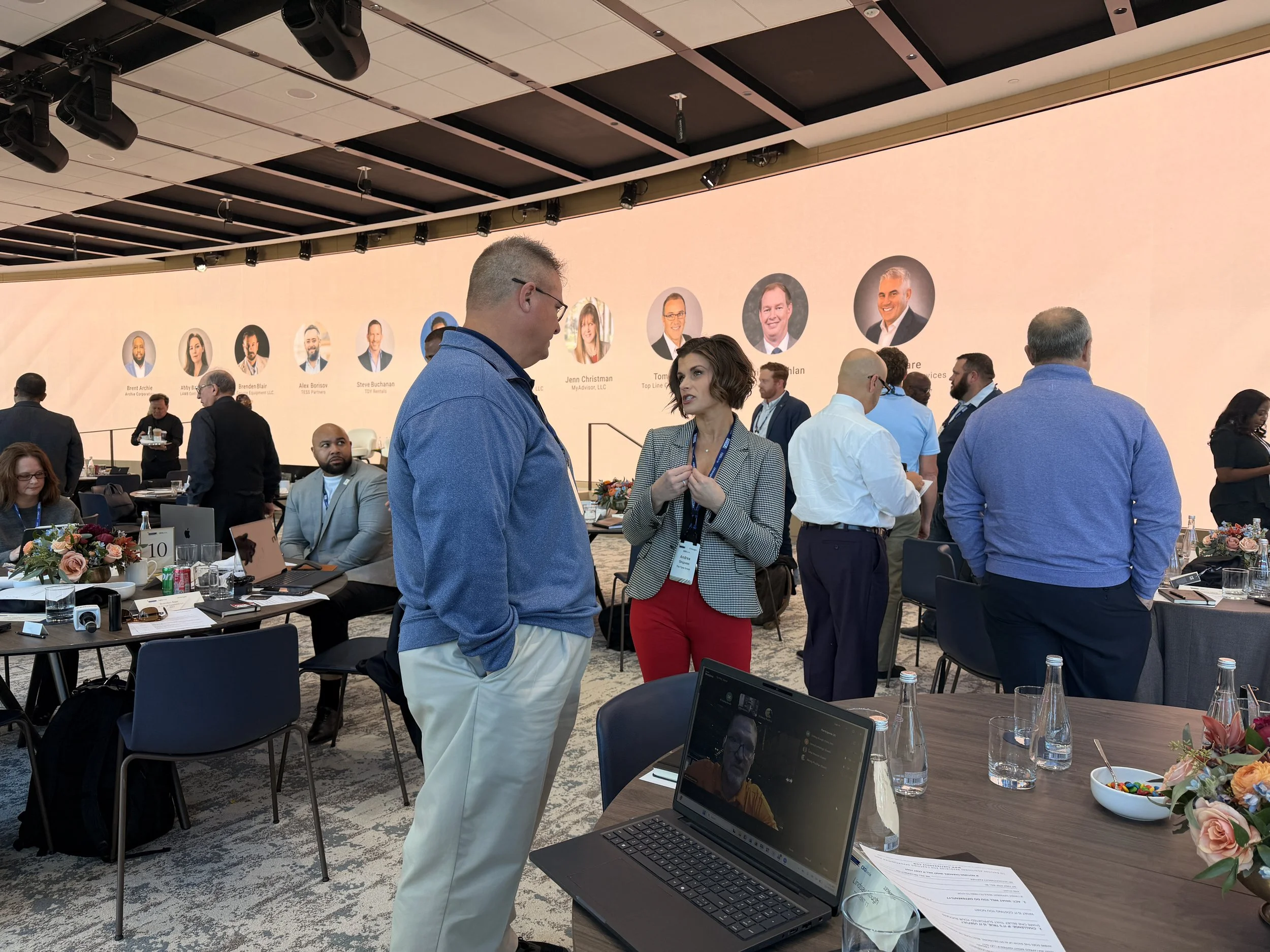
Photo Credit: Lauren Hope, 2027
When Success Reinforces Our Limitations
Success has a remarkable ability to reinforce our beliefs about ourselves. Throughout our careers, we develop capabilities, habits, and ways of thinking that produce results, earn recognition, and shape our professional identities. We learn what works, repeat those behaviors, and gradually develop expectations about who we need to be and how we need to operate to remain successful.
The difficulty is that the beliefs supporting our success can become so familiar that we stop recognizing them as beliefs at all.
Consider a leader who has built a career on being exceptionally prepared. Years of positive reinforcement may have created a belief that being fully prepared is essential to demonstrating competence, making it increasingly difficult to embrace unfamiliar opportunities or act without certainty. Another executive may have developed a reputation for being decisive and self-sufficient, gradually accepting the belief that asking for support signals weakness or undermines credibility.
In both cases, a genuine strength has become associated with an assumption that restricts how the leader thinks, responds, and approaches new challenges.
These are examples of self-limiting beliefs: assumptions we accept as facts that influence our choices and behaviors, often without conscious awareness. They are not necessarily rooted in insecurity or a lack of confidence. In fact, some of the most deeply entrenched self-limiting beliefs develop precisely because they have been reinforced by years of achievement.
The discipline, determination, and drive that got you here may not be what gets you where you want to go.
The challenge is recognizing when an assumption that once served us has become a limitation, particularly when our accomplishments appear to validate the way we've always approached our work.
The Organizational Cost of Mindset
Mindset is often discussed as an individual characteristic, but its influence extends into the organizations we lead. What executives believe about their own capabilities, the abilities of others, the nature of success, and the consequences of failure can shape how they respond to uncertainty, evaluate opportunities, approach challenges, and establish expectations.
Psychologist Carol Dweck's research on fixed and growth mindsets provides an important foundation for understanding these differences. A fixed mindset reflects the belief that abilities and intelligence are largely static, while a growth mindset recognizes the potential for development through learning, effective strategies, effort, and feedback.
Research conducted by Dweck and her colleagues in collaboration with Senn Delaney examined how these orientations appear within organizational cultures. Employees in organizations characterized by a growth-mindset culture reported 49% stronger agreement that their companies foster innovation and 65% stronger agreement that their companies support risk-taking, compared with employees in fixed-mindset organizations.
Although these findings describe associations rather than establishing a direct causal relationship, they illustrate the importance of the beliefs that become embedded within an organization.
For a business owner or senior executive, the implications are substantial. A leader who believes mistakes are evidence of incompetence may unintentionally create an environment where people avoid experimentation. Someone who associates personal worth with consistently achieving exceptional results may become increasingly reluctant to pursue opportunities where success is uncertain. An executive who believes their capabilities are already well established may become less receptive to feedback that challenges their existing perspective.
These patterns can influence organizational adaptability, innovation, talent development, and long-term performance. More importantly, they demonstrate why leadership effectiveness cannot be examined exclusively through observable behaviors without considering the beliefs driving them.
Our mindset influences how we interpret the world around us, and those interpretations shape how we lead.
What Are You Telling Yourself?
My presentation explored a leadership framework connecting three elements that influence results: identity, beliefs, and behavior.
Our identity reflects who we believe we are as leaders. From that identity emerge assumptions about ourselves, our responsibilities, other people, and what success requires. Those beliefs influence our decisions, reactions, and behaviors, which ultimately contribute to the outcomes we experience.
The relationship is interconnected, and it helps explain why changing behavior can be particularly difficult when the underlying belief remains unexamined.
A leader may want to pursue greater opportunities while maintaining the belief that failure would undermine everything they've accomplished. Another may recognize the value of collaboration but continue operating from an assumption that asking for help diminishes their authority. Even when someone intellectually understands the benefits of a different approach, their existing beliefs may repeatedly pull them toward familiar patterns.
This is why leadership development requires more than simply introducing new competencies or encouraging different behaviors. Meaningful change often begins by examining the assumptions beneath those behaviors and determining whether they remain useful.
Through executive coaching, much of my work involves helping accomplished leaders identify beliefs they may never have thought to question. Not because those individuals lack ability or need fixing, but because success can make it particularly difficult to recognize the limitations of our own thinking.
The questions themselves are deceptively simple:
What are you telling yourself?
Where did that belief originate?
What evidence supports it?
And even if it was once true, is it still useful?
These questions create an opportunity to distinguish between what we know and what we've come to believe, a distinction that becomes increasingly important as responsibilities, ambitions, and circumstances evolve.
The Next Level Begins With Challenging What You Believe
One of the most consequential aspects of leadership development is recognizing that experience and accomplishments, while valuable, do not make assumptions universally true. Success provides evidence of what we've achieved under a particular set of circumstances, but it does not guarantee that the same mindset or behaviors will continue producing the outcomes we want.
That was the central challenge I brought to the leaders last week. Rather than introducing another collection of leadership techniques, we examined how their identities and self-limiting beliefs might be influencing their decisions, behaviors, and results, particularly in ways they had not previously considered.
The purpose was not to abandon the strengths responsible for their success, but to become more intentional about how those strengths influence their thinking and what might be possible if they approached a familiar challenge differently. For accomplished leaders, this requires a particular kind of intellectual humility: the willingness to acknowledge that our beliefs are not necessarily facts and that even our most successful ways of thinking may deserve reconsideration.
You've spent years making yourself indispensable, what is being indespensible costing you?
The greatest constraint on your next level of success may not be an external obstacle, a lack of capability, or an opportunity that has yet to present itself. It may be an assumption you've stopped questioning, a belief you've mistaken for fact, or an expectation you've placed on yourself that no longer serves the leader you're becoming.
The real price of being good is not the success you've achieved. It's the potential you may be limiting by continuing to believe that what made you successful is the only way to succeed.
Insight without action changes nothing.
Andrea Singsaas, MBA, ACC, PMP, is the Founder and CEO of The Tyne Group, an executive coaching and leadership development firm partnering with business owners, executives, and organizations to strengthen leadership effectiveness and organizational performance.
Research and References
Dweck, C. S. (2006). Mindset: The New Psychology of Success. Random House.
Dweck, C. S. (2014). How companies can profit from a “growth mindset.” Harvard Business Review. https://hbr.org/2014/11/how-companies-can-profit-from-a-growth-mindset
Heidrick & Struggles / Senn Delaney. (2015). Organizational mindset research findings.https://heidrick.mediaroom.com/press-releases?item=122599
Syracuse University D'Aniello Institute for Veterans and Military Families & JPMorganChase. (2026). CEOcircle cohort announcement.